
Structural Engineering
Design, build, and test work on structures and the materials they are made from.
IN PROGRESS: Structural Analysis I (CIVE 3324, Fall 2026). Project work will be added once the course work is complete.
Status key: Completed = finished, with a deliverable · In Progress = current coursework or work underway · Planned = defined, not yet started
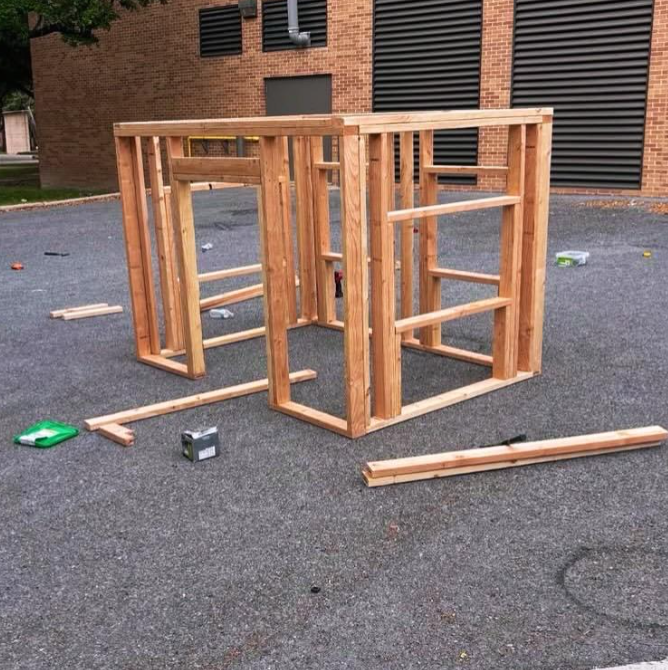
ASCE Timber-Strong Structural Design-Build
COMPLETED · ASCE UTRGV Chapter · Competed April 2026 · 3rd Place
The challenge: design and build a two-story timber structure to ASCE Timber-Strong competition rules, then load-test it on competition day against the other entered teams.
My contribution
- Design: helped with the roof design load calculations
- Detailing: worked through the framing and connection layout with the design team
- Build: one of the builders translating the drawings into the structure
Process: Design → Calculate → Detail → Build → Load test → Compete
Result: 3rd Place, ASCE Frontier Student Symposium, Corpus Christi, TX (April 2026).
What I learned: turning a load calculation into a buildable connection detail took as much coordination and troubleshooting as the engineering itself.
Materials Testing Lab
COMPLETED · CIVE 3440 Civil Engineering Materials · Fall 2024
Hands-on testing of construction materials: how strength, failure, and gradation are measured in the lab.
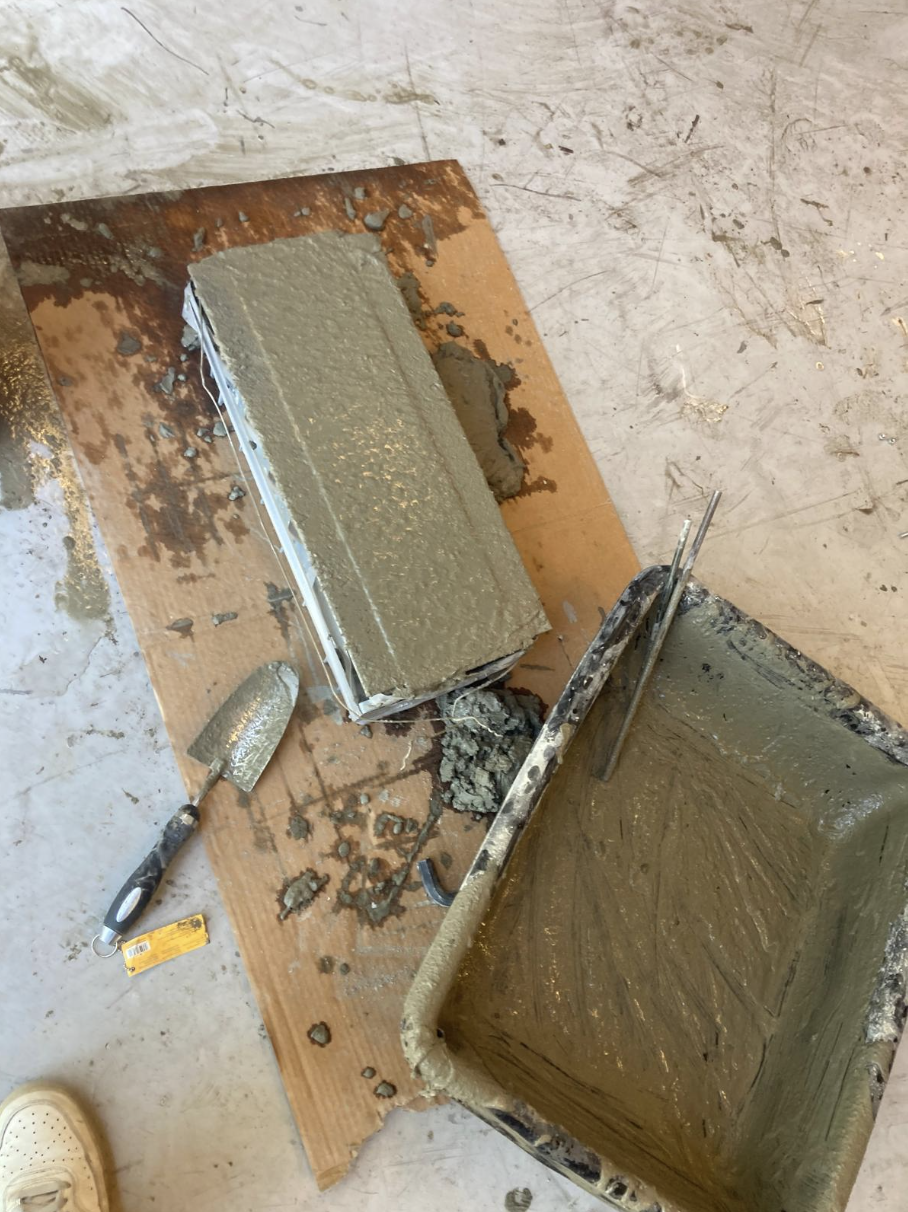
- Concrete: batched specimens from aggregate, sand, and cement, cast them in cylinder molds, and loaded a concrete/masonry block to failure in a Gilson compression machine.
- Wooden truss: a timber truss was loaded to failure on the same machine, with a peak digital readout of 9,780 at failure.
- Aggregate gradation: sieve analysis on a mechanical shaker to sort aggregate by particle size.
What it shows: three kinds of evidence from one lab: concrete behavior at failure, failure of a built structural member, and characterization of the aggregate that goes into a mix.
Concrete Crack Detection
RESEARCH · Team project · UTRGV CURE Program
Problem: structural inspection often depends on a person spotting cracks in concrete. Could an image-classification model flag cracked and non-cracked surfaces automatically?
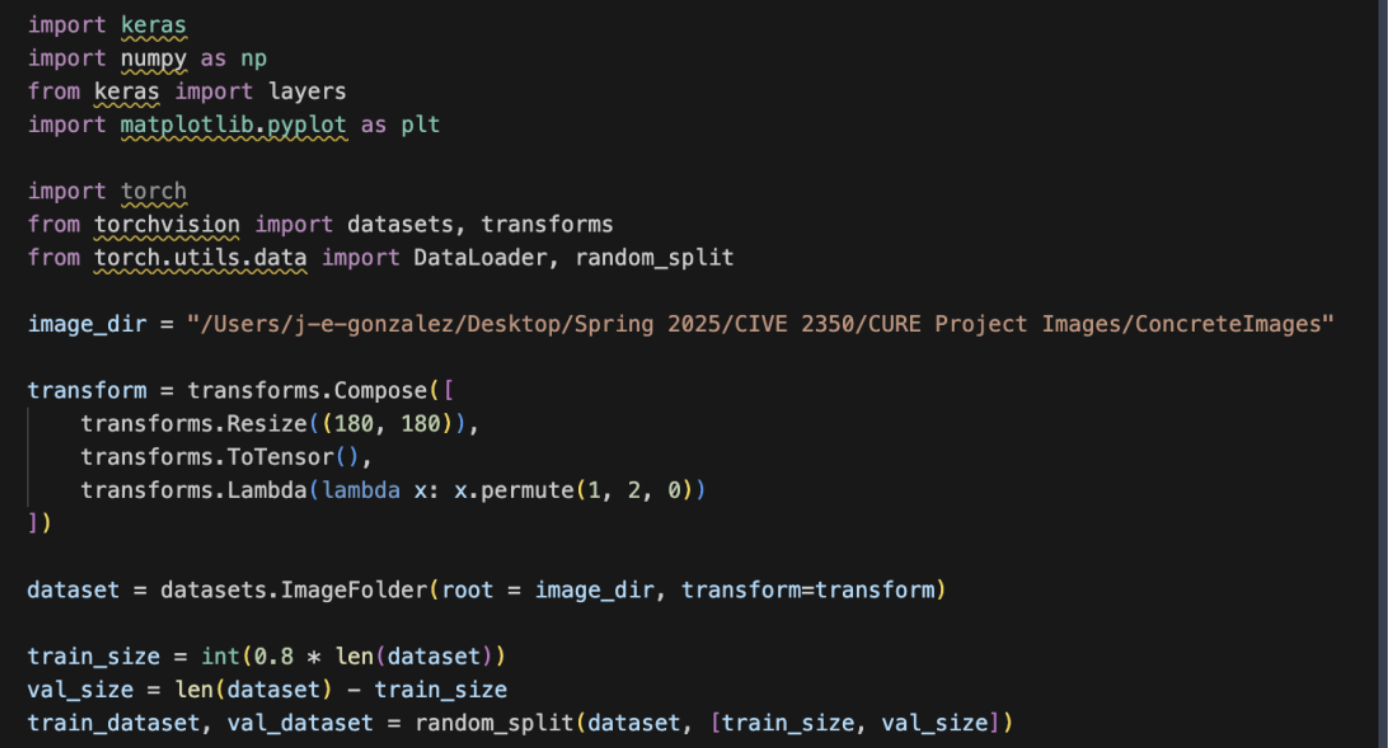
Approach: a convolutional neural network built with Keras (Python, beginner level) takes a concrete image, extracts features through three convolution and pooling stages, and outputs a single cracked / non-cracked decision.
My role: sourced an existing image-classification model for the team and adapted it (not built from scratch), ran it through 200+ training and testing cycles, and processed image datasets and analyzed results with the team.
Result: about 97% accuracy on a limited test set of roughly 80 images or fewer. This is an early experimental result, not a validated inspection model.